

A blade used to perform female genital mutilation.
Female genital mutilation (FGM) is becoming less common worldwide, but when it does occur, it is increasingly performed by professional healthcare workers, the UN World Health Organization (WHO) warned on Monday.
While the health sector worldwide plays a key role in stopping the abusive practice of FGM and supporting survivors, in several regions, evidence suggests otherwise.
As of 2020, an estimated 52 million girls and women were subjected to FGM at the hands of health workers – that’s around one in four cases.
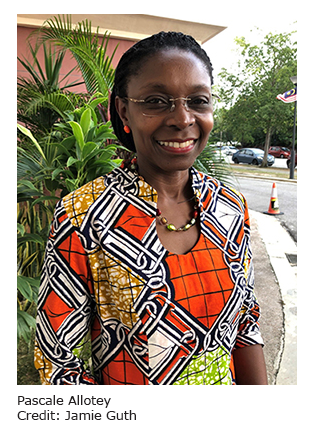
“Health workers must be agents for change rather than perpetrators of this harmful practice,” said Dr Pascale Allotey, WHO‘s Director for Sexual and Reproductive Health and Research.
She insisted that cutting is a “severe violation of girls’ rights” which critically endangers their health.
Evidence has shown that FGM causes harm, regardless of who performs it – but it can be more dangerous when performed by health workers, as a “medicalised” procedure can result in more severe wounds, WHO warned in a statement.
As part of ongoing efforts to halt the practice altogether, the UN agency issued new guidelines urging greater action from doctors, governments, and local communities.
FGM in retreat
Cutting – which encompasses any procedure that removes or injures parts of the female genitalia for non-medical reasons – also requires high-quality medical care for those suffering its effects, WHO says.
Since 1990, the likelihood of a girl undergoing genital mutilation has dropped threefold, but 30 countries still practise it, putting four million girls each year at risk.
FGM can lead to short and long-term health issues, from mental health conditions to obstetric risks and sometimes the need for surgical repairs.
‘Opinion leaders’
Putting an end to the practice is within the realm of the possible – and some countries are heading in that direction, the UN health agency said.
“Research shows that health workers can be influential opinion leaders in changing attitudes on FGM, and play a crucial role in its prevention,” said Christina Pallitto, a senior author of the study at Scientist at WHO and the Human Reproduction Programme (HRP).
“Engaging doctors, nurses and midwives should be a key element in FGM prevention and response, as countries seek to end the practice and protect the health of women and girls,” she said.
Unrelenting efforts to stop FGM have led countries including Burkina Faso to reduce rates among 15 to 19-year-olds by 50 per cent in the past three decades.
Likewise, prevalence fell by 35 per cent in Sierra Leone and 30 per cent in Ethiopia – thanks to action and political will to enforce bans and accelerate prevention.
WHO in 2022 published a prevention training package for primary care health workers, to highlight the risks of the practice and equip them to engage sensitively with communities, while factoring in local culture and perspectives.
“Because of this training, I am now able to raise women’s awareness [of FGM] and persuade them about the… disadvantages,” said one health worker during the launch.

Meanwhile Zeinaba Mahr Aouad, a 24-year-old woman from Djibouti, remembers the day when, as a ten-year-old, an unexpected visitor came to her house: “She had a syringe, a razor blade and bandages.”
The woman was there to carry out a brutal, unnecessary and – since 1995 in the Horn of Africa country – illegal operation known as female genital mutilation, which involves sewing up a girl’s vagina and cutting out her clitoris.
Even as Zeinaba’s traumatic experience has clouded her memories of that day, she still remembers the sensation of intense pain once the effects of the anaesthetic had worn off.
Difficult to walk
“I had trouble walking and when I urinated, it burned,” she said.
Her mother told her it was nothing to worry about and spoke of the degrading procedure in terms of the importance of tradition.
Like many victims of FGM, Zeinaba came from a vulnerable and poor background, living in a single room with her mother and two sisters in a rundown neighbourhood of Djibouti City.
“There was just a TV, suitcases where we stored our clothes and mattresses on which we slept,” she remembered.
Her mother sold flatbread to passersby, while Zeinaba played with a skipping rope with friends. “We also just played in the dirt.”
230 million mutilations
Some 230 million women and girls worldwide have undergone mutilations according to data released by the UN’s sexual and reproductive health agency, UNFPA, and it is on the increase as ever younger children, sometimes below five years old, go under the knife.
“A baby doesn’t talk,” explained Dr. Wisal Ahmed, an FGM specialist at UNFPA.
It’s often thought of as a one-time procedure, but in reality, it involves a lifetime of painful procedures that continue into adulthood.
“The woman is cut again to have sex, then sewn back together, then reopened for childbirth and closed again to narrow the orifice once more,” said Dr. Ahmed.
Tackling harmful traditions
UNFPA and its international partners have worked to put a definitive end to FGM and although these efforts have contributed to a steady decline in the rates at which the procedure is performed over the past 30 years, the global increase in population means the number of women affected is actually growing.
UNFPA continues to work with communities that still engage in the practice about the short and long-term effects.
The agency’s work has been supported across the world over a number of years by the US Government, which has recognized FGM as a human rights violation.
It is not a problem which affects just developing countries. According to US State Department figures, in the US itself, approximately 513,000 women and girls have undergone or are at risk of FGM.
Support from men
In Djibouti, in 2023, the US provided around $44 million in foreign assistance.
UNFPA confirmed that FGM programmes supported by the United States have not yet been impacted by the current stop work orders, adding that “US support to UNFPA over the last four years resulted in an estimated 80,000 girls avoiding female genital mutilation.”
Local networks
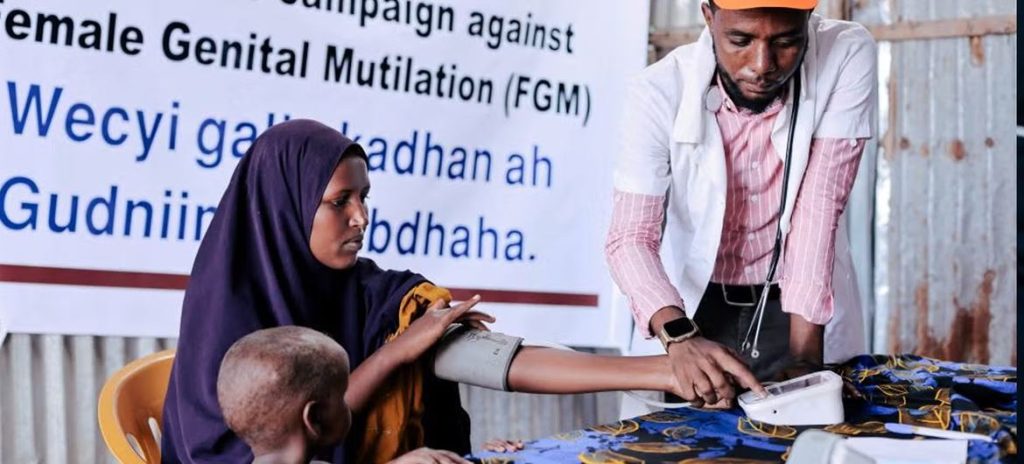
Zeinaba Mahr Aouad now works as a volunteer for a local network launched by UNFPA in 2021, which numbers over 60 women and provides support to local women’s health and rights activists.
She also visits underprivileged areas of Djibouti to raise awareness among young people and future parents, both women and men, of the harmful effects of FGM.
“Because it’s not just the woman who participates in these practices: without the agreement of the man by her side, it couldn’t be done”, she said.
Source: UN News/allAfrica/forshesafrica
Leave a Reply