
The Minister of Education, Culture and Higher Education of Somalia Farah Sheikh Abdulkadir has volunteered to integrate Gender Based Violence GBV prevention and life skills training into national curricula, targeting girls’ empowerment at the school level.
According to the United Nations Children’s Fund UNICEF, the term gender-based violence (GBV) is used to describe any harmful act perpetrated against a person based on socially ascribed/gender differences between males and females. It includes acts of causing physical, sexual or mental harm or suffering, or threats of such acts, and other deprivations of liberty. GBV stems from unequal power relations between men and women and the resulting discrimination against women. While GBV can affect both females and males, women and girls are disproportionally more affected. The risk of GBV against women and girls further increases in times of crisis.
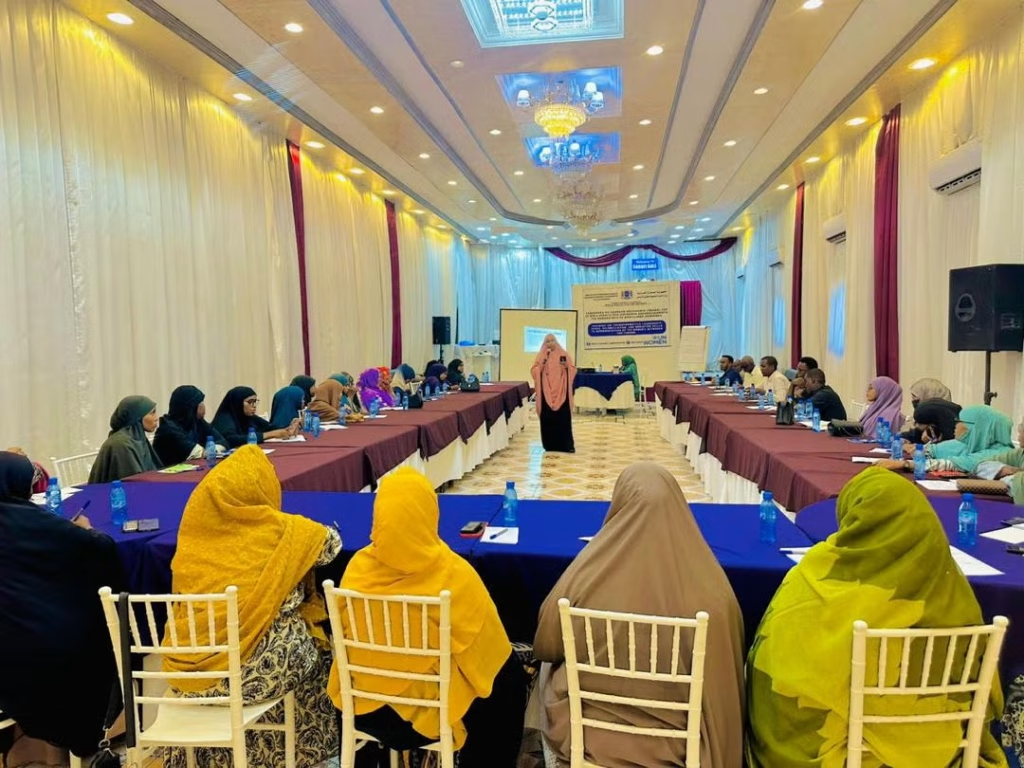
H.E Farah Sheikh Abdulkadir revealed this when the Federal Ministry of Family and Human Rights Development in Banadir, in partnership with UN Women, convened for a two-day Generation Equality Forum Commitment Makers workshop in Somali’s capital Mogadishu.
The meeting’s focus was to review and accelerate Somalia’s commitments under the Global Generation Equality Action Coalition on Gender‑Based Violence (GBV), including conflict‑related sexual violence and harmful traditional practices.
A total of 55 participants from across sectors took part in the workshop, ensuring an inclusive multi stakeholder engagement. Participants represented Federal line ministries – including Health, National Security, Justice, Education, Youth and Sports) to the Attorney General’s Office, Banadir Regional Administration, Women rights organizations and Traditional elders.
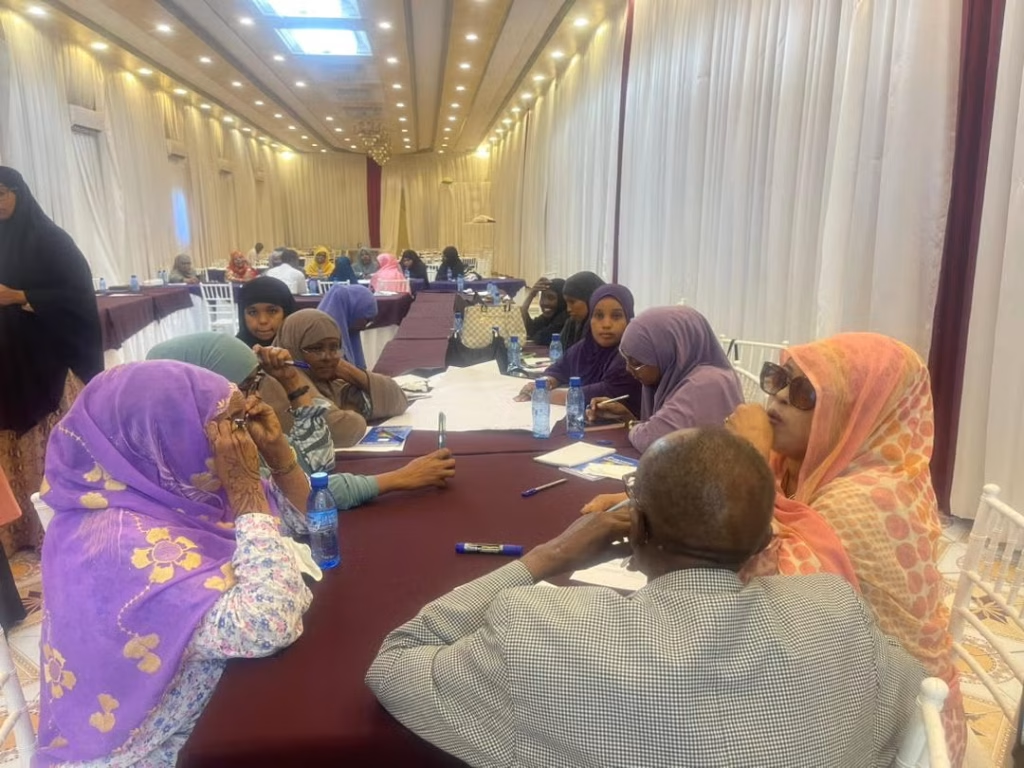
The Commitment makers endorsed the below commitments:
- Legal reform acceleration: Fast tracking the ‘Rape and Indecency Bill’ and establishing specialized gender based violence (GBV) units in courts.
- Survivor centered justice: Guaranteeing gender sensitive investigations, legal aid, and trauma informed prosecution.
- Community engagement: Mobilizing traditional leaders to lead dialogue on harmful practices, leveraging restorative justice principles.
- Prevention & services: Scaling up medical, psychosocial, shelter, and legal support for survivors.
- Women’s leadership: Ensuring survivors and women rights holders sit at all decision-making tables.
- Accountability mechanism: Instituting a national monitoring framework for transparent tracking of progress.
Also at the Forum, the Attorney General’s Office pledged to prioritize survivor dignity by streamlining GBV case management and dedicating courtroom space for confidentiality.
A respected elder, Sheikh Abdullahi, committed to advance clan level restorative justice dialogues, signaling grassroots ownership of reform.
According to the Organisers the Forum marked a pivotal leap forward by combining legal, judicial, community, and educational strategies into a unified roadmap.
Moving ahead, it said the newly established monitoring mechanism will be critical to sustain momentum, ensuring accountability in real time adding that Somalia now stands better equipped than ever to transform commitments on paper into lasting protection and empowerment for all its women and girls.
Mawuko Fiaxe Agyemang/UN Women Africa
Leave a Reply