
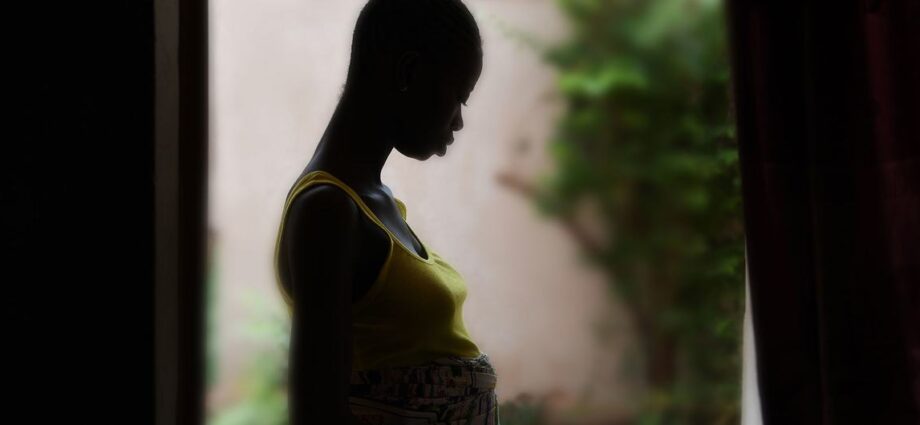
In the Sahel region of Africa, worsening violence and poverty — driven by displacement, hunger, and terrorism — are depriving women and girls of their rights to safety, education, and a viable future.
The risks facing women and girls in this vast region are severe and systemic, with political instability, environmental degradation, and the decline of international presence having harmful consequences.
From abductions and child marriages to exclusion from schools and public life, their lives and opportunities are being steadily erased, said Sima Bahous, Executive Director of UN Women, addressing members of the Security Council.
“In the Sahel, where the world’s gravest concerns converge, women and girls are the most affected,” she said.
She added that the crises caused by the rise in terrorism, poverty, hunger, the collapse of the aid system, and the shrinking of civic space “converge — violently and disproportionately — on their bodies and their futures.”

On the Path to Erasure
In countries such as Burkina Faso, Mali, Niger, and Chad, life for women under the control of terrorist groups “is an exclusion from public space,” said Ms. Bahous.
Their movements, visibility, and even clothing are heavily restricted. Schools have been burned or closed, depriving more than one million girls of access to education.
“Abduction is not a consequence of terrorism in the Sahel; it is a tactic,” she added, noting that in Burkina Faso alone, the number of women and girls abducted has more than doubled in the past 18 months.
In Mali, 90% of women are subjected to female genital mutilation. Child marriage rates in some areas are among the highest in the world. Maternal mortality, driven by early pregnancies and poverty, is also among the highest globally.
Declining Resilience
“The distances women and girls travel to fetch water or firewood are increasing, while their safety is decreasing,” said Ms. Bahous.
Two-thirds of women surveyed said they feel unsafe during these journeys. Climate change is compounding the difficulties, with extreme heat and drought increasing mortality and food insecurity in the region.
Yet despite growing needs, international aid is weakening.
By May, only 8% of this year’s humanitarian appeal for the region had been met.
Development aid has fallen by nearly 20% over the past two years. As a result, programmes to protect and empower women have been suspended, while gender equality ministries are being defunded, merged, or closed.
Shrinking Political Space
At the same time, democratic and civic space is narrowing.
In Niger, only 14% of participants in recent institutional reforms were women. In Mali, just two of the 36 members who drafted the new national charter were women.
Leonardo Santos Simão, head of the United Nations Office for West Africa and the Sahel (UNOWAS), also warned that the deteriorating security environment — marked by waves of jihadist attacks and political unrest — was undermining progress and fueling displacement.

He added that the shrinking space for the media, civil society, and women’s organizations was threatening hard-won gains, and that a broader crisis was undermining governance and peacebuilding efforts.
“The region’s economy remains highly vulnerable to external shocks. Although macroeconomic indicators are improving, rising debt levels continue to limit governments’ ability to provide essential services,” he said.
Fragile Gains
Nevertheless, progress is possible — and, in some cases, visible.
In Chad, women now hold 34% of parliamentary seats. In conflict-affected border areas of Mali and Niger, women’s participation in local peacebuilding has risen from 5% to 25%, helping to resolve more than 100 conflicts linked to the scarcity of natural resources.
Across the region, joint UN programmes have increased adolescent girls’ school return rates by 23% and doubled women’s participation in local governance in 34 conflict-affected communities.
In addition, a joint initiative by the United Nations and the World Bank has provided more than three million adolescent girls with healthcare, safe spaces, and life-skills training.
Supporting the Women of the Sahel
Still, these gains remain fragile.
“We cannot abandon the Sahel, regardless of policies, funding, and geopolitical challenges,” Ms. Bahous concluded.
“Let us stand in solidarity with the women of the Sahel — not out of charity, but in recognition of their power to shape a better future.”
Source : NATIONS Info/L’africaine
Leave a Reply