
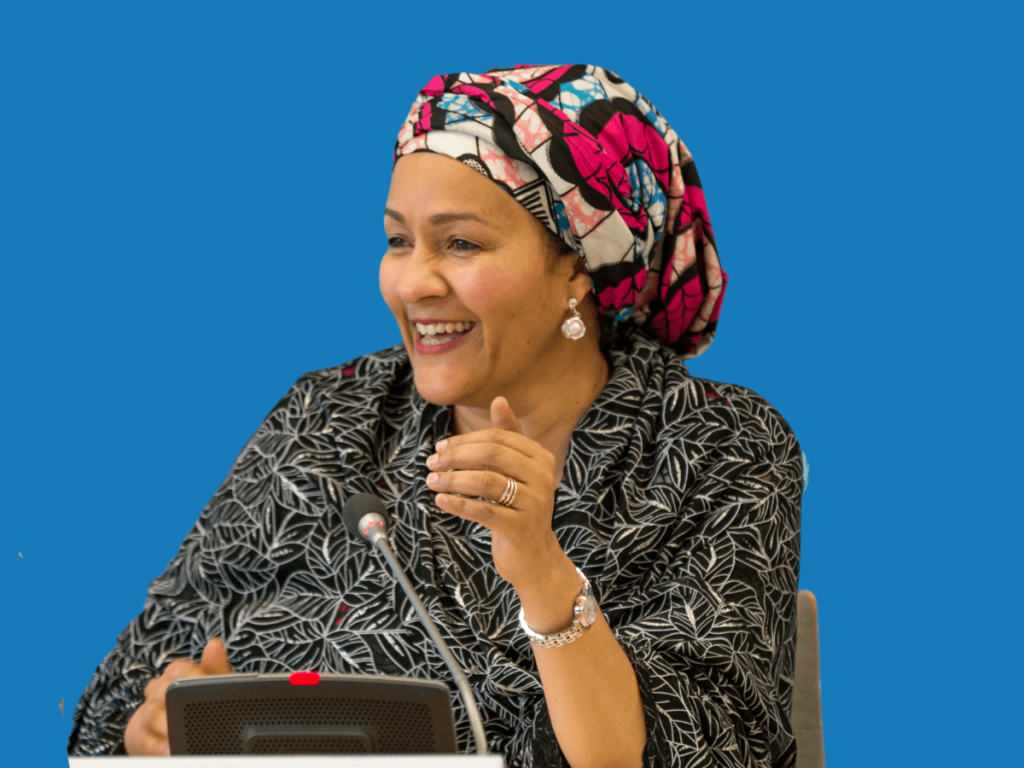
United Nations Deputy General Amina J. Mohammed says Africa is trying to make strides that are necessary to achieving Sustainable Development Goal SDG 5 which aims at attaining gender equality and empowering women and girls.
But the approach to development in Africa has always been ad hoc, and I think we have been pitting some of our greatest challenges against each other in terms of making choices. For example, we will say, “Well we have to make a choice between a woman and health. Or a woman and an education budget.” And I think this is where we have got it wrong. The fact is that women are an integral part of any investment, be it in health, in education, in agriculture, etc, she elaborated. Amina J. Mohammed made these assertions in an interview with the New Africa Women Magazine.
For there to be gender parity , she explain the need for more women in decision-making and particularly in parliaments. [For example] in the DRC, they have a constitution that acknowledges parity, but they need the law to effect that. And in addition to the law, they also need to make investments in women, their education, their ability to actually participate in diplomacy and therefore, in the decision-making that goes along. In addition, there are a number of investments that need to be made in line with the laws aimed at empowering women, she explained.
Also the UN Deputy Secretary General also expressed shock at how Nigeria has a low level of representation of women in parliament – both in the Senate and the House saying we actually have men actively opposing efforts to reduce their capacity. I think here, Nigeria needs to change its strategy and it needs to start on the local level of the parties. Again, I see the great capacity of women in Nigeria to participate, so I don’t think that’s our challenge. Our challenge is the construct and what the male community puts into it.
Touching on gender-based violence, Amina j. Mohammed believes that as a human family, the first thing we have to do is draw up our sphere of tolerance. And then to look at what we need to put in place to ensure that tolerance becomes a sustainable part of our community.
She cites instances In Nigeria, where gender-based violence takes many different forms depending on cultural practices adding that there’s been a lot of work that the United Nations has done to overcome some of them. But new incidences are being seen, as we face the complexities of some of the conflicts we have in the northeast, for instance, with Boko Haram kidnappings, the rapes and the sex for food which is unacceptable according to her.
The UN Deputy General is however pleased with some gains in other parts of the country where her outfit has greatly reduced some of [the harmful] cultural practices.
Amina j. Mohammed also points out the DRC, where Goma was once known as the rape capital of the world, adding that they have made strides and put in place people who are responsible for trying to reverse the tide. Working with UN Women and our special representative on sexual violence in conflict, we have seen a huge reduction, although not enough, because we said zero tolerance. However, we need to scale this up and share the best practice, she said.
ForshesAfrica News
Leave a Reply