
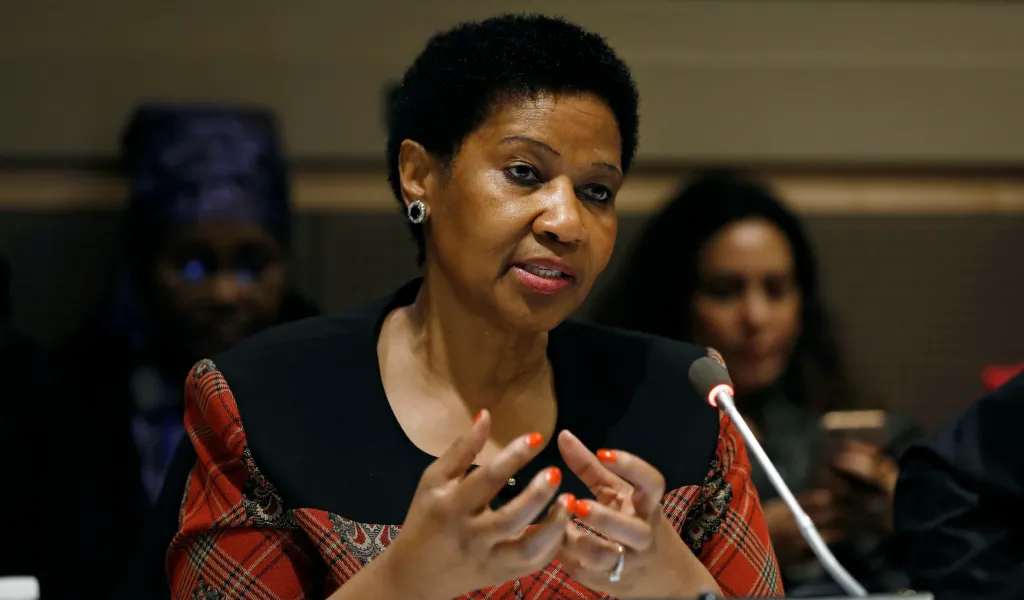
UN Women Executive Director Phumzile Mlambo-Ngcuka expresses disappointment that gender equality remains unachieved, despite the significant efforts of her organization. “We do know that strides have been made in almost every country in the world, although some have done better than others”, she explained.
And the fact that we have now identified the significant areas and interventions that are required for gender equality, means that we have found a methodology for driving towards substantive and sustainable equality, because what we have learnt in many cases, is how to create change that lasts. And in the SDGs [Sustainable Development Goals] that is what we are trying to do.
She made these assertions in an interview with the New African Magazine.
The UN Women Director noted that within the 17 Sustainable Development Goals, indicators recognizing the complexity of gender inequality and the need for comprehensive interventions have been established. Therefore, if we look at the issue of poverty, for example, we have specific intervention areas for women. If we look at the issue of infrastructure, we are looking at how to invest in infrastructure for women, especially in areas of social infrastructure such as water, sanitation and energy, in order to reduce the burden of care for women, who have to take care of these responsibilities where the infrastructure doesn’t exist.
In the Goal that also deals with decent work and growth (SDG Goal 8), Phumzile Mlambo-Ngcuka explained that the UN is advancing the kinds of growth and macroeconomics that will specifically work for women. “Unlike before where gender equality was a women’s movement in the forefront, we have now institutionalised it and made gender equality everyone’s business. SDG Goal 5 looks at gender equality in a deeper way; we are pushing for the engagement of men and boys, who are part of the problem and the solution”.
She expressed the need to have an ecosystem in almost every country, to orchestrate an ecosystem that every family will be exposed to adding that they have been working in every country with the leaders, the heads of state, urging them to take up in their own right the issues of gender inequality and to demonstrate zero tolerance. “I have to say, we have had varying levels of success, but also we have people who, if you like, are shapers of attitude. Our HeForShe campaign, for example, calls out male individuals and leaders on what changes they will commit to bring about, using their relative advantage because of the positions they hold in society” she further noted
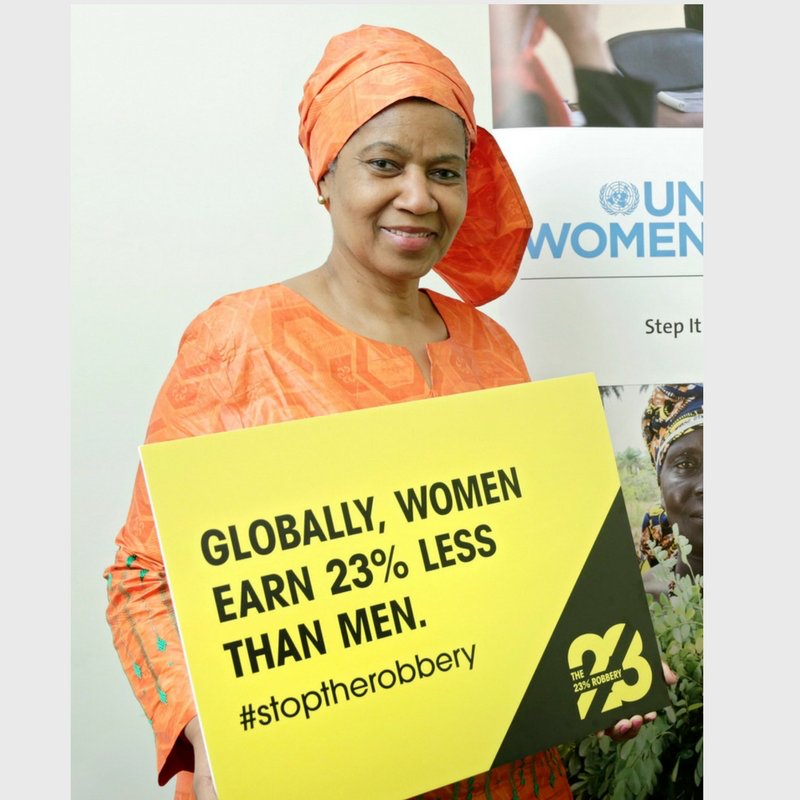
In the private sector, Phumzile Mlambo-Ngcuka said any CEO who is not looking into the issue of the gender pay gap – currently at 23% globally – is presiding over a situation where women are being robbed of 23% of their pay packet. “We have had some companies that have committed to ending inequity by 2020, but we would like this to end tomorrow, because each day that goes by, women are losing out,”.
On the call for action to achieve gender parity, she said we rely a lot on the citizens of the countries themselves, because they can do more than us, otherwise we are overestimating our capacity. UN Women needs the support of ministers. We also work with civil societies and with young people in every country, to infuse ideas that energise the issue of gender equality. But nothing beats the involvement and participation of citizens themselves. As a result, we are pushing for a strong agenda of movement building amongst women, because the women’s movement goes up and down in its strength. The importance of building a strong women’s movement is therefore very crucial”.
ForshesAfrica News
Leave a Reply