
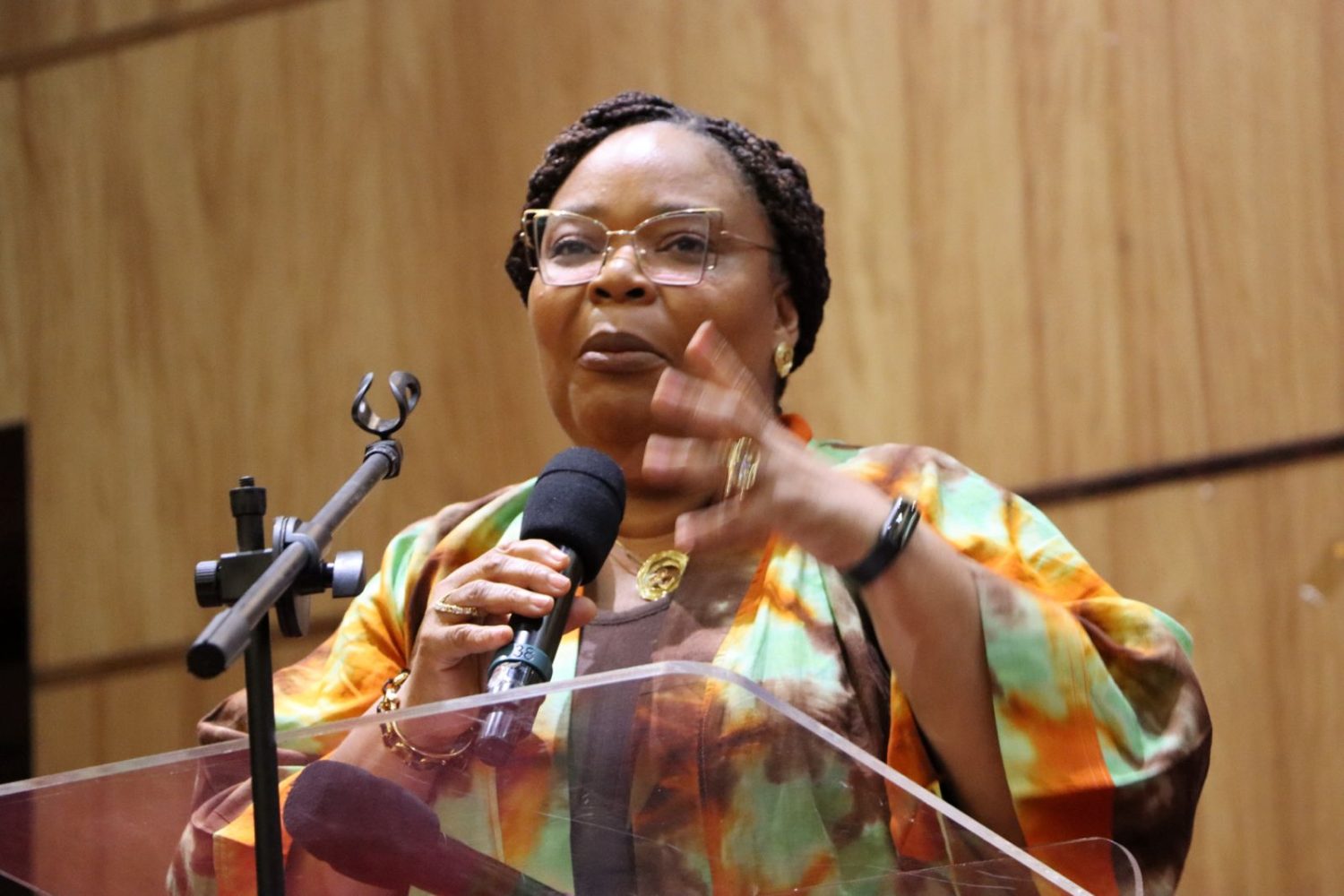
Nobel Peace Laureate Leymah Gbowee has challenged male politicians and policymakers in Liberia to stop making decisions on women’s reproductive health.
She argued that until those politicians and policymakers have personally experienced menstruation and the pain associated with it, they should not use women’s reproductive issues as political campaign tools.
Speaking at the 2025 Sexual and Reproductive Health and Rights (SRHR) Conference organized by the Amplifying Rights Network (ARN) in Monrovia, Gbowee condemned what she described as persistent political interference and hypocrisy in matters concerning women’s bodies.
She criticized the pattern in which male-dominated legislatures use women’s reproductive rights as political talking points, especially in debates about abortion and access to reproductive health services.
“To the men in the house, to the male ministers, as far as to the highest, until you have your periods, until you’ve gone through monthly menstruation and all that is associated with the reproductive health of a woman, you have no right to decide on our bodies,” she declared to loud applause from the audience.
She noted that the inclusion of words like “abortion” or “sexual rights” in any proposed law often triggers resistance from politicians who are more concerned about religious or political backlash than the health and rights of women.
“Once they see abortion in any document, they want to take it off. My message to politicians is clear: our bodies are not instruments in political campaigns. They belong to us, and we must be part of the decision-making process,” she said.
The Nobel laureate, best known for her role in mobilizing women to end Liberia’s 14-year civil war, urged women across the country to speak loudly about their rights, including the right to make choices regarding their own bodies.
She stressed that women should not be shamed or criminalized for seeking abortions in cases of rape, incest, or medical complications.
“There are cases where young girls are raped and are not prepared to have children. Do we leave room for those things?” Gbowee asked, questioning the government’s failure to address such realities.
Her remarks reignite a sensitive national debate on abortion laws and women’s bodily autonomy in Liberia, where restrictive policies continue to limit access to safe reproductive healthcare.
In Liberia, abortion is only permitted when a pregnancy poses a risk to the mother’s life, or in cases of rape and incest, but even then, access remains difficult due to stigma, bureaucracy, and lack of medical facilities.
She urges politicians to stop using patriarchal privilege to legislate women’s pain, further noting that it’s time to stop playing politics with women’s lives and enact laws that will provide opportunities for women to have free abortion without fear of stigmatization.
Meanwhile, the 2025 Sexual and Reproductive Health and Rights (SRHR) Conference, a three-day event brought together government officials, health experts, and youth leaders to discuss strategies for advancing rights-based approaches and improving access and equity in SRHR services across Liberia.It was under the theme “Breaking the Barriers: Advancing SRHR for All.” It focuses on promoting sexual and reproductive health and rights nationwide, with particular emphasis on addressing stigma, encouraging youth participation, and strengthening health systems.
Source: The New Dawn
Leave a Reply