
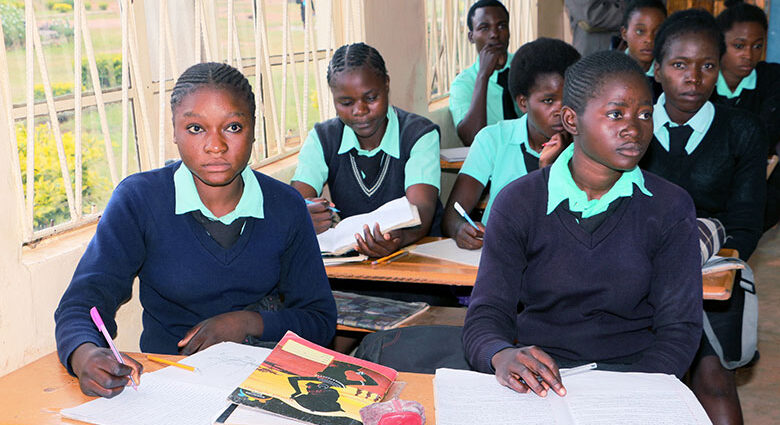
Faced with demographic transition and the challenges of youth employment, Nigeria has identified investment in girls’ education as a strategic lever to ensure sustainable development.
Ziauddin Yousafzai, co-founder of the Malala Fund, recently highlighted the economic potential of this approach. In an interview with Arise News he estimated that guaranteeing twelve years of schooling for all Nigerian girls can generate up to $100 billion in additional GDP per year. According to him, girls’ education is not only a fundamental right but also a powerful driver of economic prosperity.
He emphasized the transformative impact of such an investment noting that “investing in girls’ education doesn’t just change their lives or those of their families or communities and if we want to see this country prosper, we must invest in education.”
The country has already launched concrete initiatives. The AGILE program (Adolescent Girls Initiative for Learning and Empowerment), supported by the World Bank, aims to improve access to education for 8.6 million adolescent girls across eighteen states. For its part, the Malala Fund has pledged an additional $50 million over five years to expand girls’ access to secondary education. These efforts need to be reinforced through public policies that promote inclusion and improve the safety and accessibility of schools, especially in rural or insecure areas.
The benefits of educating girls go far beyond economics. Each additional year of schooling for a woman can increase her earning potential by nearly 10%, while also producing positive public health outcomes such as lower infant mortality and delayed early pregnancies. At the national level, reducing the gender education gap could reshape Nigeria’s productive structure and increase women’s participation in the labor force. Although the Global Gender Gap Report 2024 shows that Nigeria has reached an educational parity rate of 84.2%, the country still has progress to make in terms of women’s economic and political representation.
Yousafzai’s call comes as Africa as a whole is actively seeking to turn its demographic dividend into an economic opportunity. The World Bank recently approved $1.08 billion in financing for Nigeria, nearly half of which is allocated to the education sector. By heavily investing in its young girls, Nigeria — and the African continent as a whole — is betting on productivity, innovation, and resilience, making this strategy a potentially high-yield investment in the face of youth unemployment and social inequality.
Source: L’africaine
Leave a Reply